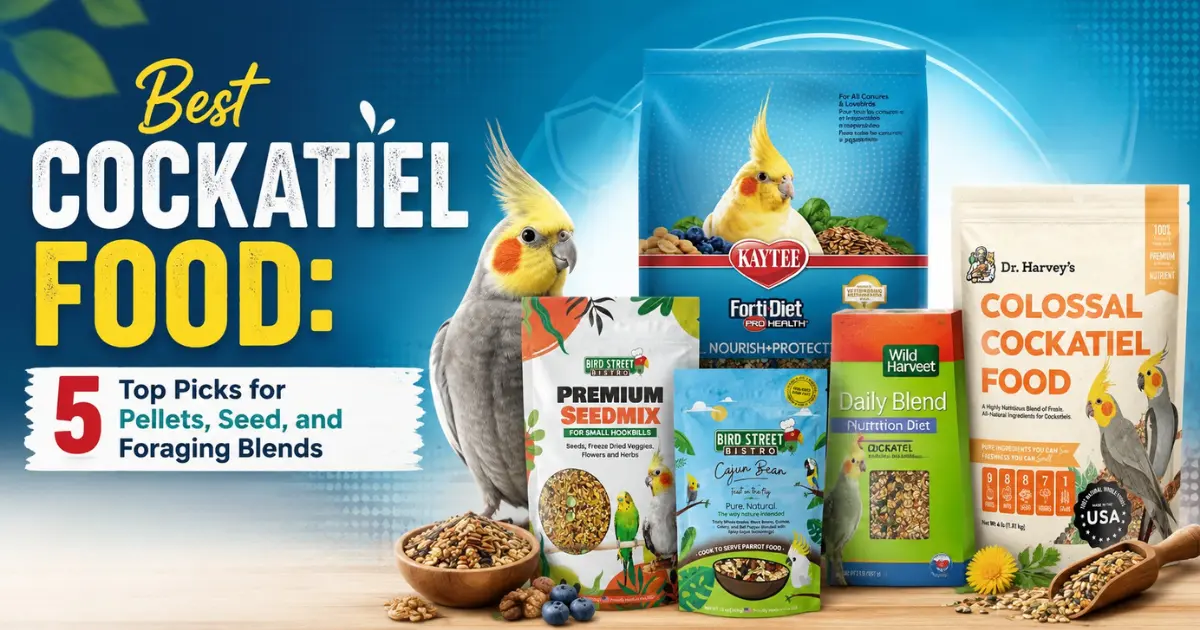
Every bag on the shelf claims to be the best cockatiel food you can buy. Most of that’s just marketing copy, but underneath it there are real differences — pellet or seed, fortified or plain, built for foraging or built for convenience. Worth actually sorting through before you commit to a five-pound bag your bird might not even touch. So, five options, each doing something a little different. One’s a fortified daily pellet, one’s meant to be cooked, one’s about as close to “wild diet in a bag” as you’ll find on Amazon.
Quick Comparison
| Product | Highlights | Best For |
| Kaytee Forti-Diet Pro Health Cockatiel Food | Prebiotics, probiotics, omega-3s | Everyday fortified diet |
| Dr. Harvey’s Colossal Cockatiel Blend | Natural seeds, nuts, fruits, and vegetables | Whole-food, foraging-style feeding |
| Bird Street Bistro Premium Bird Seed Mix | Organic grains and seeds, no fillers | Clean-label foraging blend |
| ZuPreem FruitBlend Cockatiel Pellets | Fortified pellets, fruit-flavored | Daily pellet diet, easy seed transition |
| Bird Street Bistro Colorado Green Harvest | Cook-and-serve grain and legume blend | Fresh, warm meals as a dietary addition |
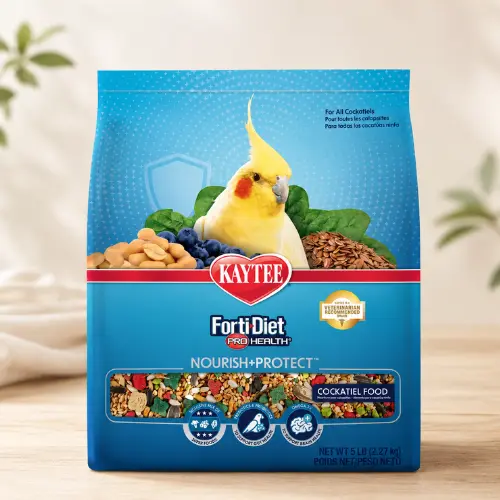
1. Kaytee Forti-Diet Pro Health Cockatiel Food
What Is It?
Kaytee’s everyday pick, basically — chunk-style pieces instead of loose seed, formulated specifically for adult cockatiels rather than tossed together for whatever bird happens to eat out of the bag.
Key Features
There’s a “superfood” thing going on here — flaxseed, peanuts, blueberries, spinach, worked into the base formula. Prebiotics and probiotics show up for gut health, and Kaytee credits omega-3s and antioxidants with supporting brain function, for what that’s worth. Skin and feather health gets a mention too, which lines up with dried whole egg sitting in the ingredient list. It’s allergen-free, and honestly the ingredient list just keeps going — vitamin and mineral supplements stacked on top of each other.
Specifications
| Spec | Detail |
| Brand | Kaytee |
| Flavor | Unflavored |
| Age Range | Adult |
| Item Form | Chunk |
| Weight | 5 pounds |
| Breed Recommendation | Small Breeds |
| Target Species | Cockatiel |
| Allergen Information | Allergen-Free |
| Diet Type | Veterinary Diet |
Pros & Cons
Pros:
- Made specifically for cockatiels, not a catch-all bird blend
- Prebiotics and probiotics included for gut health
- Omega-3s and antioxidants worked into the formula
- Superfood ingredients — flaxseed, blueberries, that sort of thing
Cons:
- Ingredient list includes several artificial colors (FD&C Yellow No. 5, Red No. 40, Blue No. 1, titanium dioxide)
- Some birds take a minute to adjust from loose seed to chunk pieces
FAQs — Kaytee Forti-Diet Cockatiel Food
Is this cockatiel food formulated for adult birds specifically? It is — labeled as an adult formula. What’s included for digestive support? Prebiotics and probiotics, meant to support gut bacteria. Does this food contain artificial ingredients? A few artificial colors show up in the ingredient list, alongside natural stuff like flaxseed and dried egg.
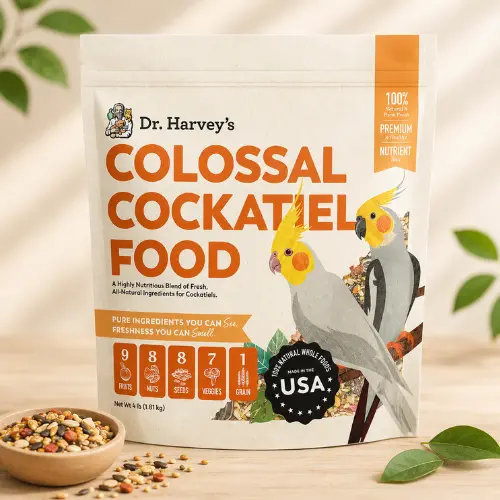
2. Dr. Harvey’s Colossal Cockatiel Blend
What Is It?
Completely different approach — no pellets, no chunks, just a mix of seeds, nuts, fruit, vegetables, and grains meant to look a lot closer to what a cockatiel would actually dig up on its own in the wild.
Key Features
The ingredient count is genuinely long: nine fruits, eight nuts, eight seeds, seven vegetables, plus oat groats thrown in. That’s really the whole point of this one — variety, foraging behavior, not just a bowl of identical pieces. Dr. Harvey’s states there’s nothing chemical, dyed, preserved, or synthetic in the mix, and it’s farmed and packaged in the USA. Per the guaranteed analysis, it runs at least 14% crude protein, 15% crude fat, and 9% crude fiber, capping out at 12% moisture.
Specifications
| Spec | Detail |
| Brand | Dr. Harvey’s |
| Flavor | Natural |
| Age Range | All Life Stages |
| Item Form | Seeds, Nuts, Fruits, Vegetables, Grains |
| Weight | 4 pounds |
| Breed Recommendation | All Breed Sizes |
| Ingredient Claim | Additive-Free |
| Nutrient Claim | High Protein |
Pros & Cons
Pros:
- Huge variety of whole-food ingredients across seeds, nuts, fruit, and vegetables
- No chemicals, dyes, preservatives, or synthetic ingredients, per the label
- Pushes natural foraging behavior instead of passive eating
- Farmed and packaged in the USA
Cons:
- No fortified vitamins or minerals the way pellet diets typically include
- With that much variety, birds tend to pick favorites and leave the rest
FAQs — Dr. Harvey’s Colossal Cockatiel Blend
What form does this cockatiel food come in?
Whole seeds, nuts, dried fruit, vegetables, and grains — not pellets, not chunks.
Does it contain artificial preservatives?
No. The brand says it’s free of chemicals, dyes, preservatives, and synthetic ingredients.
How much protein does this blend provide?
At least 14% crude protein, according to the guaranteed analysis.
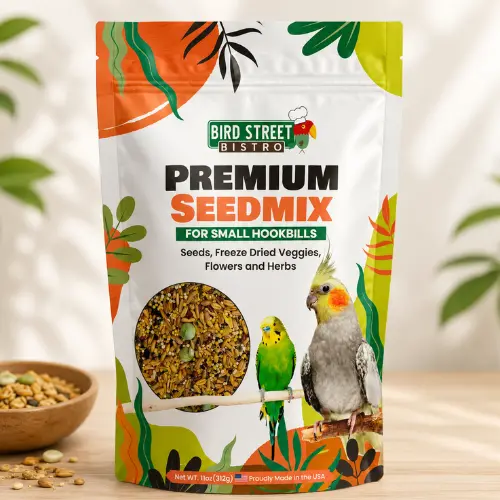
3. Bird Street Bistro Premium Bird Seed Mix
What Is It?
Built around organic, whole-grain variety rather than leaning on one dominant ingredient — a granule mix aimed at parrots, African greys, conures, and cockatiels, pitched as a step up from whatever’s sitting on a grocery store shelf.
Key Features
Almost the entire ingredient list is organic — oat groats, hulled millet, quinoa, triticale, chia, flax, hemp, plus a handful of dried herbs and flowers like calendula and rose hips mixed in for good measure. No corn, soy, or peanuts, according to the brand, and zero artificial colors, flavors, or preservatives. The texture variety is intentional too — different seed and grain sizes are meant to get a cockatiel investigating and pecking around instead of just scooping identical pellets out of a dish.
Specifications
| Spec | Detail |
| Brand | Bird Street Bistro |
| Age Range | All Life Stages |
| Item Form | Granule |
| Weight | 11 ounces |
| Breed Recommendation | For Small Hookbills |
| Diet Type | Plant-Based |
Pros & Cons
Pros:
- Mostly organic, with a genuinely wide range of grains and seeds
- Free from corn, soy, and peanuts, per the label
- No artificial colors, flavors, or preservatives
- Texture variety encourages natural foraging
Cons:
- Smaller 11-ounce bag than most other picks here
- Long, varied ingredient list — worth a scan if your bird has known sensitivities
FAQs — Bird Street Bistro Premium Bird Seed Mix
Is this bird seed mix suitable for cockatiels?
Yes — cockatiels are named right alongside parrots, African greys, and conures.
Does it contain corn, soy, or peanuts?
No, according to the brand.
How big is the bag? 11 ounces.
4. ZuPreem FruitBlend Cockatiel Pellets
What Is It?
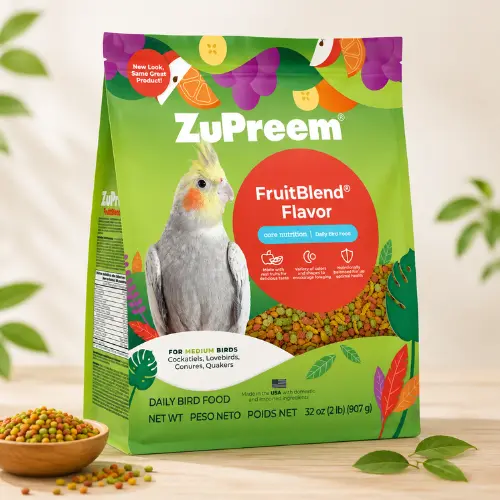
ZuPreem built this as a complete daily pellet diet for cockatiels, plus quakers, lovebirds, and small conures. It’s meant to carry most of the diet rather than sit on the side, with fruit flavor and colorful pellets thrown in to make it more appealing than a plain formula would be.
Key Features
Fortification’s the main pitch — vitamins, minerals, amino acids, all built in to support overall health and immune function. The pellets run low-fat too, which ZuPreem ties to heart and liver support. There’s a feeding guideline included: about 1/8 to 1/4 cup a day, with pellets covering at least 60% of total intake. They also outline a transition plan for switching a bird from seed to pellets gradually over 7 to 10 days, which is genuinely handy if you’re dealing with a picky eater.
Specifications
| Spec | Detail |
| Brand | ZuPreem |
| Flavor | FruitBlend |
| Age Range | All Life Stages |
| Item Form | Pellet |
| Weight | 2 pounds (Pack of 2) |
| Breed Recommendation | Medium Breeds |
| Target Species | Cockatiels, Quakers, Lovebirds, Small Conures |
| Nutrient Claim | Low Fat |
Pros & Cons
Pros:
- Complete daily diet, fortified with vitamins, minerals, and amino acids
- Fruit-flavored pellets that help ease seed-to-pellet transitions
- Low-fat, positioned around heart and liver support
- Clear daily feeding guidelines included
Cons:
- Ingredient list includes artificial colors (Red 40, Yellow 5, Yellow 6, Blue 1)
- Contains added sugar, unlike a few of the more natural blends here
FAQs — ZuPreem FruitBlend Cockatiel Pellets
Is this a complete daily cockatiel food?
Yes — built as a nutritionally complete daily diet meant to make up most of a bird’s intake.
How much should I feed daily?
Roughly 1/8 to 1/4 cup a day, with pellets making up at least 60% of total intake, per ZuPreem.
Can this help transition a bird from seed to pellets?
Yes — the brand suggests mixing pellets in gradually over 7 to 10 days.
5. Bird Street Bistro Colorado Green Harvest
What Is It?
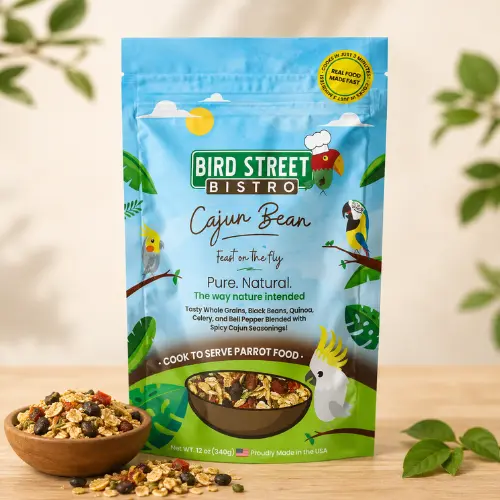
The odd one out here. It’s a dried mix meant to be cooked, not scooped straight from the bag, built for parrots, parakeets, cockatiels, macaws, and African greys. Think of it as more of a fresh-food add-on than a full-time base diet.
Key Features
Pre-cooked brown rice, couscous, triticale, millet, quinoa, dried blueberries, almonds, kale, carrots, peas, plus a bit of cayenne pepper and basil for flavor. It cooks in as little as 3 minutes by boiling, so prep isn’t the burden it sounds like — quick enough to offer a warm, fresh-feeling meal without turning into a whole production. The brand markets it as free of fillers, added sugar, and sulfites, built mostly from freeze-dried and air-dried ingredients.
Specifications
| Spec | Detail |
| Brand | Bird Street Bistro |
| Flavor | Colorado Green Harvest |
| Age Range | All Life Stages |
| Item Form | Granule |
| Weight | 11 ounces |
| Breed Recommendation | All Breed Sizes |
| Diet Type | Plant-Based |
Pros & Cons
Pros:
- Cooks in as little as 3 minutes for a warm, fresh-style meal
- Combines whole grains, legumes, dried fruit, and vegetables
- No fillers, added sugar, or sulfites, per the label
- Works for cockatiels alongside several other parrot species
Cons:
- Needs cooking, unlike the ready-to-serve picks on this list
- Better as a dietary add-on than a bird’s sole food source
FAQs — Bird Street Bistro Colorado Green Harvest
Does this cockatiel food need to be cooked? Yes — it’s a dried mix, cooks in about 3 to 15 minutes by boiling. What’s in the Colorado Green Harvest blend? Pre-cooked brown rice, couscous, triticale, millet, quinoa, dried blueberries, almonds, kale, carrots, peas, and a couple of seasonings. Is this meant to replace a daily pellet or seed diet? Not really — it’s positioned more as a fresh-food addition than a full replacement.
Buying Guide: How to Choose the Right Cockatiel Food
A few things worth working through before picking a bag.
Pellets vs. Seed and Foraging Blends
Pellet diets like the Kaytee and ZuPreem options deliver the same nutrition in every single bite, since a bird can’t really pick and choose. Seed and whole-food blends, like Dr. Harvey’s and the Bird Street Bistro mix, go the other direction — more variety, more natural foraging, but also more room for a bird to eat around the parts it doesn’t love.
Reading Past the Marketing Claims
“Natural,” “premium,” “vet-approved” — these words show up on basically every bag, and they’re worth checking against the actual ingredient list rather than taking at face value. Some formulas back the claims up with genuinely short, recognizable ingredients. Others lean harder on fortification to compensate for a much longer, more processed list.
Matching Bag Size to Your Flock
Bag sizes here run from 11 ounces up to 5 pounds. Smaller bags make sense if you’re testing a new food or just feeding one bird — no point committing to five pounds of something your cockatiel might reject on day one. A bigger bag, like the Kaytee 5-pound option, makes more sense once you know it’s working.
Life Stage and Daily Feeding Amounts
Most of these are labeled for all life stages, though the Kaytee formula specifically targets adult birds. Sticking to the feeding guidelines on the bag — ZuPreem’s 1/8 to 1/4 cup suggestion, for instance — helps avoid over- or under-feeding, especially the first time you’re trying a new cockatiel food. If you’re rounding out more of your bird’s setup, our bird accessories collection covers feeders, baths, and toys to go along with any of these.
Frequently Asked Questions
What’s the difference between cockatiel pellets and seed-based cockatiel food?
Pellets, like the ZuPreem FruitBlend, deliver identical nutrition in every bite. Seed and whole-food blends, like Dr. Harvey’s, bring more variety but let a bird pick favorites more easily.
How much food for cockatiels should I feed daily?
Depends on the product — ZuPreem’s pellet guidelines land around 1/8 to 1/4 cup a day, but checking the specific directions on whatever bag you’re using is the safer bet.
Are foraging-style cockatiel foods better than pellets?
Not necessarily better, just different priorities. Foraging blends lean into natural behavior; pellets lean into consistent nutrition per bite. Plenty of owners just rotate between both.
Can I switch my cockatiel from seed to pellets easily?
Usually takes some patience. ZuPreem recommends mixing pellets into the current food gradually over 7 to 10 days instead of switching all at once.
What should I look for in cockatiel pellets specifically?
Fortified vitamins and minerals, lower fat content, and a short, recognizable ingredient list — several of the pellets and blends here spell those details out right on the label.
Conclusion
Five different approaches to the same basic job here. Kaytee and ZuPreem go the fortified-pellet route for consistent daily nutrition. Dr. Harvey’s and the Bird Street Bistro seed mix lean into natural variety and foraging instinct instead. The Colorado Green Harvest blend sits somewhere else entirely — a cook-and-serve option that works better as a supplement than a full replacement. Really, it comes down to matching the food’s format to how your particular cockatiel actually likes to eat.