Not every bird eats the same way. A food that works well for a parrot can be the wrong pick for a finch outside your window.
Some owners want a complete daily pellet. It should be one a bird can’t pick apart. Others want a seed blend that pulls in a variety of backyard visitors. A few just want an organic, low-additive option with a simple ingredient list.
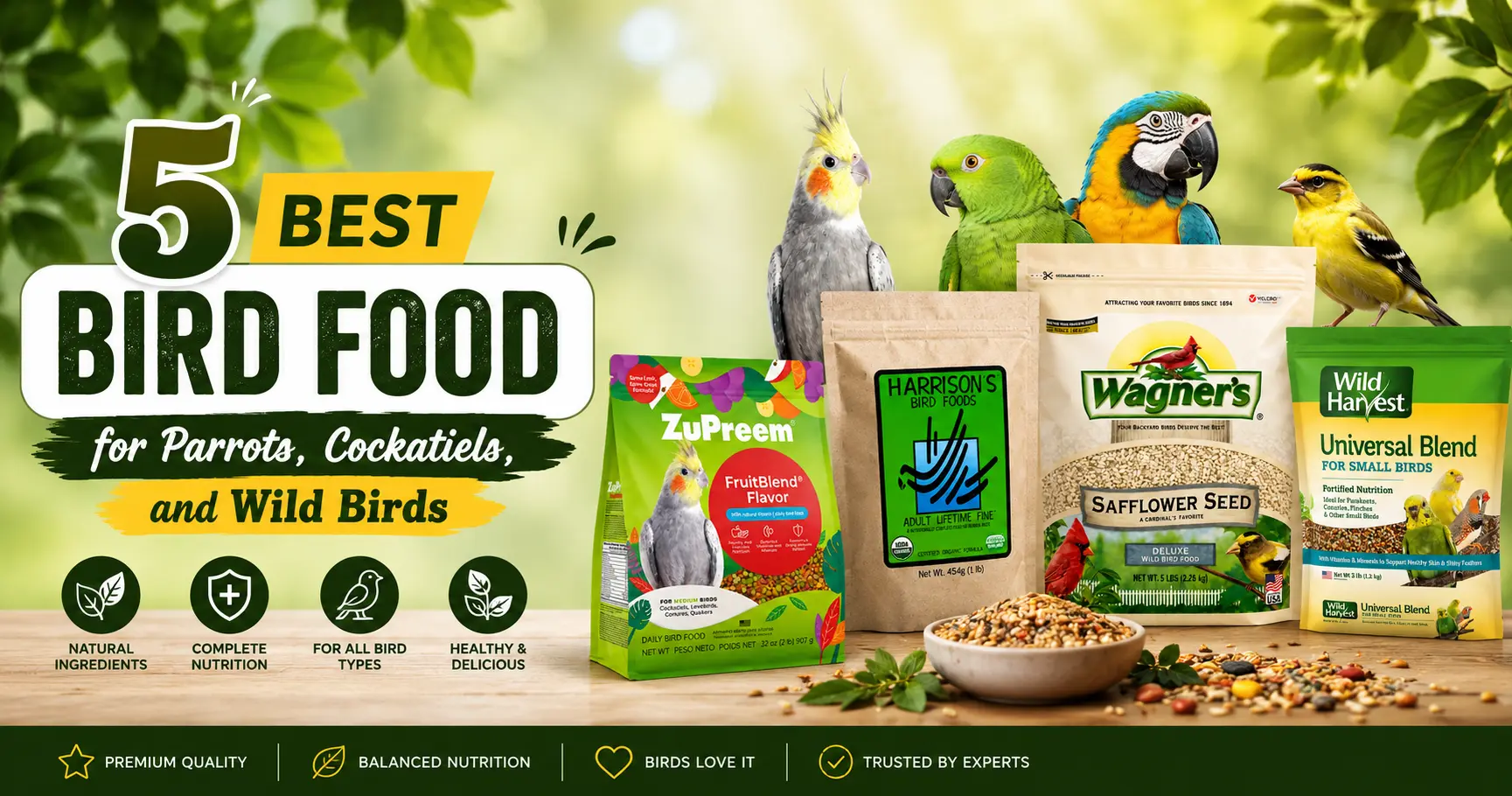
This list rounds up five of the best birds food picks currently available. It covers pellets, seed blends, and specialty mixes. Both pet birds and wild ones are covered here.
Quick Comparison
|
Product |
Highlights |
Best For |
|
ZuPreem FruitBlend Cockatiel & Conure Food |
Uniform fruit-flavored pellets, full vitamin panel |
Cockatiels, conures, lovebirds, quakers |
|
Harrison’s Bird Foods Adult Lifetime |
Certified organic, non-GMO, no added sugar |
A clean-ingredient maintenance diet |
|
Kaytee Nut & Fruit Wild Bird Seed |
Sunflower seeds, nuts, and dried fruit blend |
Attracting a wide range of backyard songbirds |
|
Wagner’s Safflower Seed Wild Bird Food |
Single-ingredient safflower seed |
Feeding cardinals while discouraging squirrels |
|
Wild Harvest Universal Blend |
Fortified seed mix with added vitamins |
Canaries, parakeets, and other small pet birds |
1. ZuPreem FruitBlend Cockatiel & Conure Food
What Is It?
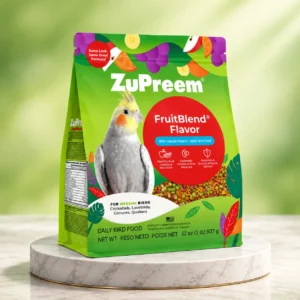
The ZuPreem FruitBlend is a pelleted birds food. It’s built for cockatiels, conures, lovebirds, and other medium-sized parrots. Instead of mixing loose seeds and dried fruit in a cup, ZuPreem presses every nutrient into one uniform pellet. That matters if you’ve ever watched a bird dig out just the sunflower seeds and leave the rest behind. The uniform pellet shape is the main reason FruitBlend made this list.
Key Features
Every pellet carries the same blend of ground grains, real fruit pieces, and added vitamins. A bird can’t selectively skip the nutritious parts this way. The fruit-shaped pellets are flavored with real oranges, apples, grapes, and bananas. That flavor helps win over birds that are reluctant to move off seeds.
The formula also includes calcium and amino acids like DL-methionine and L-lysine. A full vitamin panel rounds it out. So it’s built to work as a primary food source, not just an occasional treat. It’s naturally preserved with mixed tocopherols and citric acid, rather than relying purely on synthetic preservatives.
Specifications
|
Spec |
Detail |
|
Brand |
ZuPreem |
|
Flavor |
FruitBlend |
|
Item Form |
Pellet |
|
Age Range |
All Life Stages |
|
Best For |
Cockatiels, conures, lovebirds, quakers |
|
Container Type |
Bag |
|
Package Size |
2 lb |
|
Item Weight |
2 pounds |
Pros & Cons
Pros:
- Uniform pellet keeps birds from skipping past key nutrients
- Real fruit flavoring encourages picky eaters to move off seed
- Includes a full vitamin and amino acid panel
- Naturally preserved with mixed tocopherols
Cons:
- Contains added sugar, so it’s not a low-sugar pick
- Color additives may concern owners wanting a simpler ingredient list
FAQ: ZuPreem FruitBlend
Q: Is this birds food only for cockatiels? No. It also suits conures, lovebirds, quakers, and other medium-sized parrots that take a similar pellet size.
Q: Does it contain real fruit? Yes. It includes actual fruit pieces along with natural fruit flavoring, not just artificial flavoring alone.
Q: How do I switch a seed-eating bird onto this pellet? Mix it gradually with the current food over one to two weeks. A sudden switch often gets refused at first.
2. Harrison’s Bird Foods Adult Lifetime Formula
What Is It?
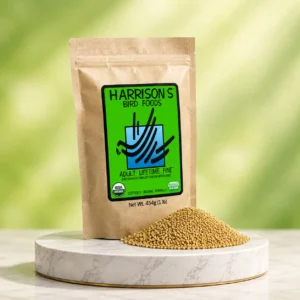
This is a certified organic, non-GMO pelleted birds food. It’s built for adult birds that aren’t currently breeding or molting. Harrison’s treats this as a maintenance diet, not a flavor-forward everyday pellet. So the ingredient list stays deliberately short.
Key Features
The formula skips synthetic dyes and added sugar entirely. It relies on organic-certified ingredients instead. It’s manufactured in the USA and marketed as human-grade. That’s a step beyond what most pelleted bird diets claim.
Because it targets the maintenance life stage, it suits small to medium companion birds already eating a stable diet. Birds with extra caloric needs from breeding or heavy molting are better matched to a different formula.
Specifications
|
Spec |
Detail |
|
Brand |
Harrison’s Bird Foods |
|
Flavor |
Unflavored |
|
Item Form |
Pellet |
|
Age Range |
Adult |
|
Best For |
Small to medium birds, non-breeding/non-molting |
|
Container Type |
Bag |
|
Package Size |
1 lb |
|
Item Weight |
0.45 kg |
Pros & Cons
Pros:
- Certified organic and non-GMO ingredient sourcing
- No artificial colors or added sugar
- Human-grade manufacturing standard
- Vegan formula with no animal byproducts
Cons:
- Plain, unflavored pellet can be a harder sell for birds used to fruit-flavored food
- Smaller 1 lb bag means more frequent reordering for larger households
FAQ: Harrison’s Bird Foods
Q: What makes this different from a flavored pellet like FruitBlend? It’s unflavored and certified organic. There’s no added sugar or artificial dyes, so the taste and ingredient list stay simple.
Q: Is it suitable for baby or breeding birds? This formula is built for adult, non-breeding, non-molting birds. A different life-stage formula fits younger or breeding birds better.
Q: Why might my bird ignore it at first? Birds raised on flavored pellets or seed mixes often need a slower transition. Gradual mixing usually helps it get accepted.
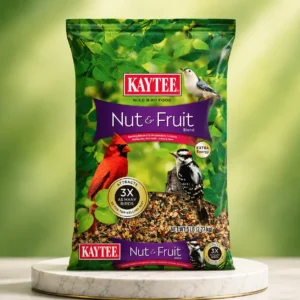
3. Kaytee Nut & Fruit Wild Bird Seed
What Is It?
This is a wild bird seed blend, not a pet bird pellet. It’s built to bring backyard songbirds to a feeder. It combines sunflower seeds, peanuts, mixed nuts, raisins, and cherries into one chunky mix.
Key Features
The seed-and-nut combination appeals to a wide range of species. That includes cardinals, chickadees, nuthatches, grosbeaks, juncos, and woodpeckers. It’s calorie-dense, so it works especially well during colder months when wild birds need more fuel.
Kaytee has built wild bird blends for well over a century. This mix reflects that feeding-station experience. It favors variety over a single seed type.
Specifications
|
Spec |
Detail |
|
Brand |
Kaytee |
|
Flavor |
Cherry |
|
Item Form |
Chunk |
|
Best For |
Cardinals, chickadees, nuthatches, woodpeckers |
|
Container Type |
Bag |
|
Package Size |
5 lb |
|
Item Weight |
5 pounds |
Pros & Cons
Pros:
- Attracts a wide variety of backyard songbird species
- High-energy blend suited to colder-weather feeding
- Long-standing, trusted wild bird food brand
Cons:
- Nut and dried fruit content can also attract squirrels
- Not designed for pet parrots or indoor birds
FAQ: Kaytee Nut & Fruit Blend
Q: Which birds does this mix attract most? Cardinals, chickadees, nuthatches, grosbeaks, juncos, and woodpeckers are common feeder visitors drawn to this blend.
Q: Can I feed this to a pet parrot instead of wild birds? It’s built for outdoor wild bird feeding. A dedicated pellet like ZuPreem or Harrison’s is a better everyday choice indoors.
Q: Will this bring squirrels to my feeder? Yes. The nut and dried fruit content can appeal to squirrels, so a squirrel-resistant feeder helps if that’s a concern.
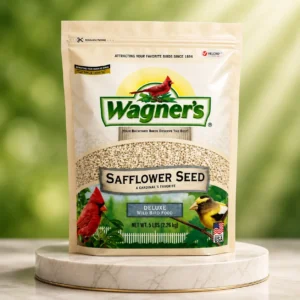
4. Wagner’s Safflower Seed Wild Bird Food
What Is It?
This is a single-ingredient safflower seed blend made for outdoor feeding stations. Rather than mixing several seed types, Wagner’s keeps this bag to one ingredient. It’s aimed specifically at attracting cardinals while keeping squirrels away.
Key Features
Safflower has a bitter taste that most squirrels avoid. So this bag doubles as a light squirrel deterrent without excluding the birds many owners most want to see. It’s a lower-fat option compared to nut-heavy blends. It’s also made in the USA from non-GMO seed.
Because it’s a single ingredient, it mixes easily into other seed blends. That makes it simple to add broader species appeal on top of the squirrel-resistant benefit.
Specifications
|
Spec |
Detail |
|
Brand |
Wagner’s |
|
Flavor |
Mild and Nutty |
|
Item Form |
Seeds |
|
Best For |
Cardinals, discouraging squirrels |
|
Container Type |
Bag |
|
Package Size |
5-Pound Bag |
|
Item Weight |
5 pounds |
Pros & Cons
Pros:
- Bitter taste generally deters squirrels
- A favorite seed among cardinals and several other songbirds
- Non-GMO, made in the USA
- Lower fat than nut and fruit blends
Cons:
- Single-ingredient mix attracts fewer species than a blended seed
- Some birds may take longer to try an unfamiliar single seed type
FAQ: Wagner’s Safflower Seed
Q: Does safflower seed really keep squirrels away? Most squirrels avoid its bitter taste. That’s why it’s commonly used to cut down on squirrel visits at a feeder.
Q: Which birds prefer safflower seed the most? Cardinals are especially fond of it, along with a number of other backyard songbirds.
Q: Can I combine this with a nut and fruit blend? Yes. Many owners mix it with a blend like Kaytee’s for broader species appeal while still limiting squirrel activity.
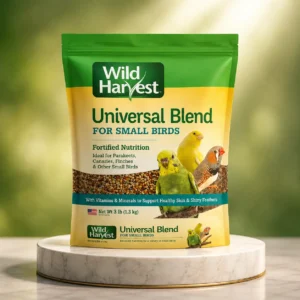
5.Wild Harvest Universal Blend for Small Birds
What Is It?
This is a fortified seed blend built for small pet birds like canaries, parakeets, and finches. It’s not a wild backyard mix. It combines millets, oat groats, canary grass seed, and flaxseed with an added vitamin and mineral package.
Key Features
Because it’s a seed-based diet, birds can pick out favorite pieces. That’s why Wild Harvest fortifies the entire blend with vitamins, minerals, and amino acids. This helps close the nutrition gap that comes with picky eating.
The mix is meant for daily cup-filling, not just occasional treats. It’s formulated specifically around the needs of small companion species. That sets it apart from the larger-format seed and nut blends made for outdoor feeders.
Specifications
|
Spec |
Detail |
|
Brand |
Wild Harvest |
|
Flavor |
Cherry |
|
Item Form |
Seed |
|
Best For |
Canaries, parakeets, finches |
|
Container Type |
Bag |
|
Package Size |
Small (3 lb) |
|
Item Weight |
3 pounds |
Pros & Cons
Pros:
- Fortified with added vitamins and minerals
- Formulated specifically for small companion bird species
- Wide ingredient variety across millets, grains, and seeds
Cons:
- Seed-based format still allows selective eating
- Not suitable for larger parrot species
FAQ: Wild Harvest Universal Blend
Q: Is this made for wild birds or pet birds? It’s formulated for small pet birds like canaries, parakeets, and finches, not for outdoor wild bird feeders.
Q: Does it include added nutrients beyond the seed itself? Yes. It’s fortified with vitamins and minerals on top of the base seed blend.
Q: Can this be the only food my bird eats? Seed-only diets can lead to selective eating over time. Pairing it with a pellet or fresh food helps round out the diet.
Frequently Asked Questions About Birds Food
Q1: Is pelleted birds food better than a seed mix? Pellets like ZuPreem or Harrison’s deliver the same nutrition in every bite. A bird can’t sort out and skip the parts it doesn’t like this way. Seed blends, such as Kaytee’s or Wild Harvest’s, let birds pick favorite pieces. That can create nutrition gaps over time unless the mix is fortified.
Q2: Can I feed wild bird seed to a pet parrot? Not really. Wild bird seed blends like Kaytee’s Nut & Fruit or Wagner’s Safflower Seed are formulated for outdoor feeding stations. They don’t carry the balanced nutrient profile a pet parrot needs every day. A dedicated pellet like ZuPreem or Harrison’s is the safer everyday indoor choice.
Q3: Why does my bird refuse a new birds food right away? Birds are cautious by nature. A sudden switch — especially from seeds to pellets — often gets ignored at first. Mixing the new food gradually with the current one over a week or two usually works better than swapping it out overnight.
Q4: How much birds food should I feed each day? Amounts vary by species, size, and activity level. It’s best to follow the packaging guidelines and adjust based on how your bird’s body condition looks over time.
Q5: Should I rotate between different birds food brands? Rotating between a few trusted options can add variety and reduce picky eating. Switching too often or too suddenly, though, may cause some birds to stop eating altogether.
Conclusion
All five of these birds food picks solve a different feeding need. The ZuPreem FruitBlend is built around a uniform, fruit-flavored pellet. It keeps medium parrots from skipping past key nutrients. Harrison’s Adult Lifetime Formula is the pick for owners chasing a certified organic, additive-free maintenance diet.
The Kaytee Nut & Fruit blend is a high-energy option for filling an outdoor feeder. It’s built with a wide mix of songbirds in mind. Wagner’s Safflower Seed is the simple, squirrel-resistant choice for cardinal-focused backyards. And the Wild Harvest Universal Blend is built for small companion birds that need a fortified, everyday seed diet.
Whichever one fits your situation, matching the food format to the bird is still the biggest factor in getting it eaten.
Buying Guide: How to Choose the Right Birds Food
Before picking one of these five, it helps to think through a few basics.
Match the Format to the Bird
A pelleted birds food, like ZuPreem or Harrison’s, works well for pet parrots and cockatiels. They need complete nutrition in every bite. A seed blend, like Kaytee’s or Wagner’s, fits wild backyard feeding better. Foraging on loose seed matches how wild birds naturally eat.
Check the Ingredient List
Some formulas, like Harrison’s, skip added sugar and artificial color entirely. Others, like ZuPreem’s FruitBlend, use fruit flavoring and added color to appeal to picky eaters. Neither approach is wrong. It just helps to know which one matches what you’re looking for.
Indoor Birds vs. Outdoor Feeders
Wild bird blends such as Kaytee’s Nut & Fruit or Wagner’s Safflower Seed aren’t built to replace a pet bird’s daily diet indoors. If you’re feeding a companion parrot or cockatiel, a dedicated pellet or a fortified small-bird blend like Wild Harvest’s is the better everyday option.
Fortified Blends Help Offset Picky Eating
Since seed mixes let birds choose favorite pieces, a fortified option like Wild Harvest’s helps close some of the nutrition gap. Added vitamins and minerals baked into the whole blend make the difference, rather than relying on the bird to eat every piece.
If you’re setting up a home for a larger parrot species, check out our guide to the best large bird cages.