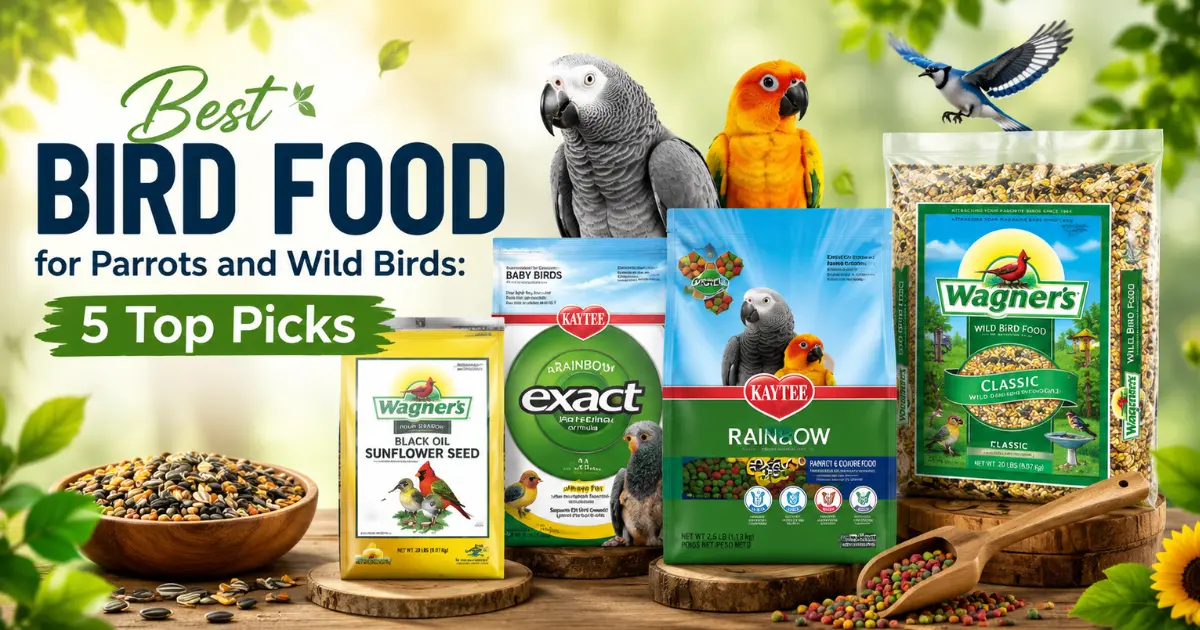
Not all bird food is chasing the same goal. Some of it’s built for a parrot living in your spare room, some of it’s meant to pull cardinals and finches into your backyard, and some of it exists purely to get a baby bird through its first few weeks. Mixing those up usually just means wasted money and a bird that won’t touch what’s in the bowl. So here’s a rundown of five bird food options — two from Kaytee built around pet parrots and conures, two from Wagner’s aimed at wild birds outside, and one from Mazuri meant specifically for hand-feeding baby parrots. Worth sorting through before you buy in bulk.
Quick Comparison
| Product | Highlights | Best For |
| Kaytee Exact Rainbow Parrot & Conure | Extruded pellets, omega-3s, prebiotics and probiotics | Adult parrots and conures |
| Kaytee Exact Hand Feeding Baby Bird Food | Powder formula, probiotics, built for weaning | Baby macaws, Eclectus, African parrots, caiques |
| Wagner’s Classic Blend Wild Bird Food | Millet, milo, cracked corn, sunflower mix | Backyard birds like cardinals, jays, and finches |
| Wagner’s Black Oil Sunflower Wild Bird Food | Thin-shell sunflower seed, 25-lb bag | High-energy feeding for wild birds |
| Mazuri High-Fat Hand Feeding Formula | Iron-controlled, probiotic-rich powder | Baby macaws, African greys, larger psittacines |
1. Kaytee Exact Rainbow Parrot & Conure
What Is It?
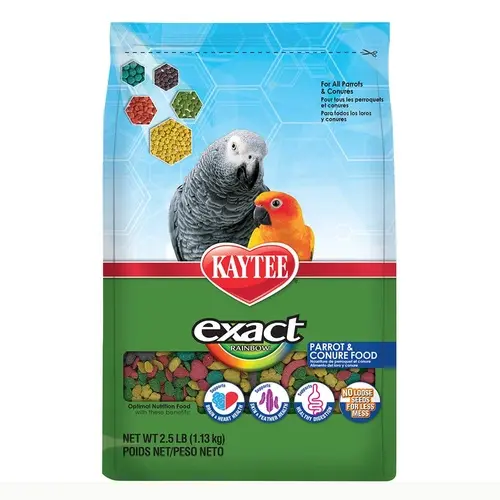
This is Kaytee’s extruded pellet formula built for adult parrots and conures — basically an everyday parrot bird food rather than a treat or supplement. It’s an established name in bird food Kaytee shoppers tend to already recognize, which counts for something when you’re feeding something as picky as a conure.
Key Features
The formula is built around omega-3s meant to support brain and heart health, along with prebiotics and probiotics aimed at digestive support. Since it’s extruded, there aren’t loose shells or seed hulls to deal with — birds are eating the whole pellet rather than picking through a mix and leaving half of it in the bowl. It’s naturally preserved, and the ingredient list includes dried whole egg and ground flax seed as part of the omega-3 content.
Specifications
| Spec | Detail |
| Brand | Kaytee |
| Flavor | Conure |
| Age Range | Adult |
| Item Form | Extruded |
| Item Weight | 2.5 pounds |
| Breed Recommendation | Small Breeds |
| Target Species | Parrots, Conures |
| Allergen Information | Allergen-Free |
| Diet Type | Vegetarian |
Pros & Cons
Pros:
- Omega-3s included to support brain and heart health
- Extruded pellets mean no shells or hulls to sort through
- Prebiotics and probiotics built in for digestive support
- Sized for small-breed parrots and conures
Cons:
- Ingredient list includes artificial colors (FD&C Yellow #5, Red #40, Blue #1)
- This is an adult formula, not suited for baby or juvenile birds
FAQs — Kaytee Exact Rainbow Parrot & Conure
Is this food for parrots or conures specifically?
Both — it’s formulated for adult parrots and conures together.
Does this bird food contain shells or hulls?
No. It’s extruded, so there’s no shell or hull left behind in the bowl.
What’s included for digestive health?
Prebiotics and probiotics, along with fructooligosaccharide listed in the ingredients.
2. Kaytee Exact Hand Feeding Baby Bird Food
What Is It?
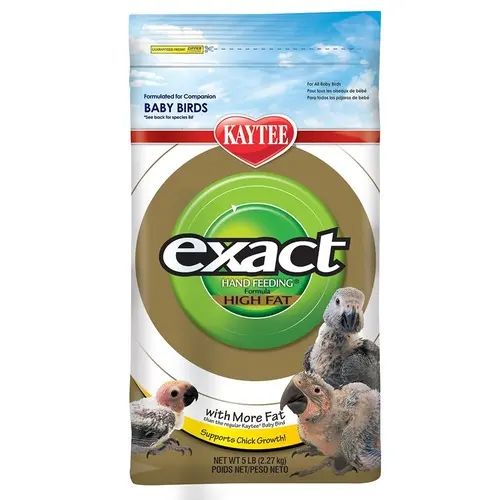
Different life stage, different job. This is a powder formula built for hand-feeding baby birds — specifically macaws, Eclectus, hawk-headed parrots, African parrots, caiques, and any baby bird under two weeks old. One thing worth flagging up front: it’s not recommended for baby cockatoos.
Key Features
The formula is aimed at growth, weaning, and getting a baby bird’s plumage looking the way it should. Probiotics are included to help establish a healthy population of gut bacteria, and the manufacturer notes it’s meant to ease stomach upset during the transition to Kaytee’s adult formula later on. Beyond nutrition, hand-feeding itself is part of the point — it’s built into a routine that helps build a bond between bird and owner during those early weeks.
Specifications
| Spec | Detail |
| Brand | Kaytee |
| Flavor | Unflavored |
| Age Range | Baby |
| Item Form | Powder |
| Item Weight | 5 pounds |
| Breed Recommendation | Small Breeds |
| Target Species | Macaws, Parrots, Eclectus |
| Diet Type | Veterinary Diet |
Pros & Cons
Pros:
- Formulated specifically for baby birds needing a higher-energy diet
- Probiotics included to support early gut health
- Designed to ease the transition when weaning onto adult food
- Builds in bonding time through the hand-feeding process
Cons:
- Not recommended for baby cockatoos, per the manufacturer
- Powder form needs to be mixed before feeding, unlike ready-to-eat pellets
FAQs — Kaytee Hand Feeding Baby Bird Food
Which birds is this formula meant for?
Macaws, Eclectus, hawk-headed parrots, African parrots, caiques, and babies under two weeks old.
Can this be used for baby cockatoos?
No — the manufacturer specifically doesn’t recommend it for cockatoos.
Does this food help with weaning?
Yes, it’s formulated to help reduce stomach upset during the transition to adult food.
3. Wagner’s Classic Blend Wild Bird Food
What Is It?
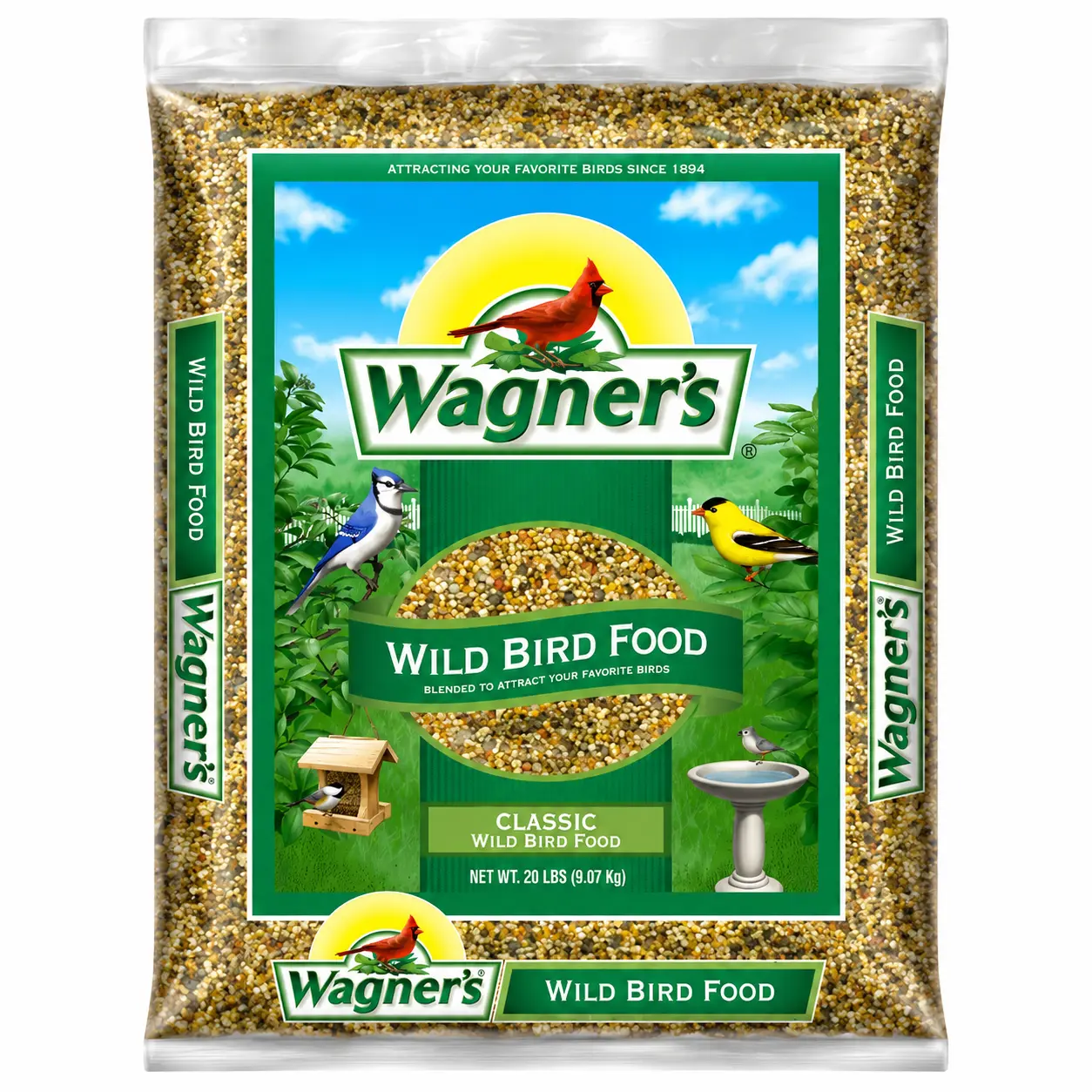
Shift gears here — this one’s for the birds outside, not the ones in a cage. It’s a mixed bird seed blend built to bring in a range of backyard species, from jays and cardinals to finches and doves.
Key Features
The mix combines white millet, milo, cracked corn, and black oil sunflower seed, which covers a fairly wide range of beak sizes and feeding preferences. It works across tube, hopper, or platform feeders, so it’s not tied to one type of setup. According to Wagner’s, it holds up across seasons too — useful in winter when natural food is scarce, through spring and summer for feeding hatchlings, and into autumn for birds building up energy to migrate.
Specifications
| Spec | Detail |
| Brand | Wagner’s |
| Flavor | Grain Blend |
| Age Range | All Life Stages |
| Item Form | Grains |
| Item Weight | 6 pounds |
| Breed Recommendation | All Breed Sizes |
| Target Species | Bird |
| Diet Type | Raw |
Pros & Cons
Pros:
- Mixed blend of millet, milo, cracked corn, and sunflower seed
- Works in tube, hopper, and platform feeders
- Usable year-round across all seasons
- Attracts a wide range of backyard bird species
Cons:
- Built for wild birds outside, not pet parrots or conures
- Grain-heavy blend may leave some seed unfinished by pickier feeders
FAQs — Wagner’s Classic Blend Wild Bird Food
What’s in this bird seed blend?
White millet, milo, cracked corn, and black oil sunflower seed.
What kind of feeder does this work with?
Tube, hopper, or platform feeders all work.
Which birds does this attract?
Species like jays, cardinals, doves, juncos, finches, and grosbeaks.
4. Wagner’s Black Oil Sunflower Wild Bird Food
What Is It?
This is Wagner’s single-ingredient option — just black oil sunflower seed, sold in a 25-pound bag for anyone who goes through birdseed quickly. It’s aimed at the same wild bird audience as the Classic Blend, just with a narrower ingredient list.
Key Features
The thin shell on black oil sunflower seed is the main selling point here — it’s easier for small-beaked birds to crack open compared to thicker-shelled seed types. Wagner’s notes the seed carries a high energy content, which matters for wild birds that need consistent fuel, and the bag is made in the USA. At 25 pounds, it’s built more for volume than variety.
Specifications
| Spec | Detail |
| Brand | Wagner’s |
| Flavor | Black Oil Sunflower |
| Age Range | All Life Stages |
| Item Form | Seed |
| Item Weight | 25 pounds |
| Breed Recommendation | Small Breeds |
| Target Species | Bird |
| Diet Type | Raw |
Pros & Cons
Pros:
- Thin shell makes it easier for small-beaked birds to open
- High energy content suited to wild bird feeding
- Made in the USA
- Large 25-pound bag cuts down on how often you’re restocking
Cons:
- Single-ingredient seed, less variety than a mixed blend
- Not intended for pet parrots or conures
FAQs — Wagner’s Black Oil Sunflower Wild Bird Food
Why choose black oil sunflower over a mixed blend?
Its thin shell is easier for small-beaked birds to crack open compared to thicker-shelled seed.
How large is this bag?
It comes in a 25-pound bag.
Where is this bird seed made?
It’s made in the USA.
5. Mazuri High-Fat Hand Feeding Formula for Baby Birds
What Is It?
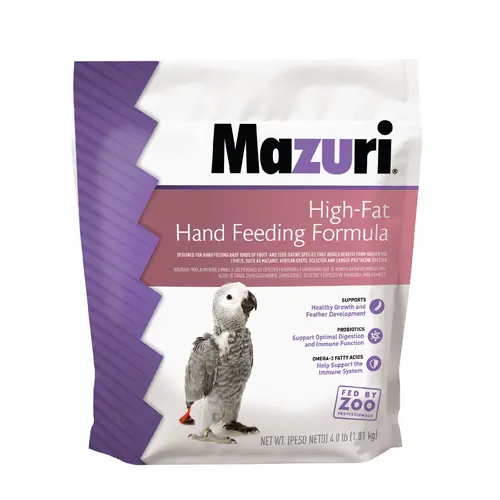
Back to hand-feeding, but from a different brand. Mazuri built this powder formula for baby birds in the larger psittacine category — macaws, African greys, Eclectus, and similar species — with an iron-controlled recipe that’s meant to work for iron-sensitive birds specifically.
Key Features
The formula is designed to promote hydration in young birds and mixes from a dry powder into a high-moisture gel. It includes several probiotic organisms meant to help establish gut microflora early on, along with natural pigments and vitamin E. Mazuri notes it uses natural preservatives with no artificial flavors or colors, and the mixing process is designed to be easy to observe for accuracy — worth something when you’re hand-feeding a bird that depends on getting the ratio right.
Specifications
| Spec | Detail |
| Brand | Mazuri |
| Flavor | Unflavored |
| Age Range | Baby |
| Item Form | Powder |
| Item Weight | 4 pounds |
| Breed Recommendation | Macaws, African Greys, Eclectus, larger psittacine species |
| Nutrient Content Claim | High Protein |
Pros & Cons
Pros:
- Iron-controlled formula built for iron-sensitive species
- Includes probiotic organisms to support gut health
- Naturally preserved, with no artificial flavors or colors
- Sized for large psittacine species like macaws and African greys
Cons:
- Powder needs to be mixed into a gel before feeding, not ready to use
- Smaller 4-pound bag compared to some other hand-feeding formulas
FAQs — Mazuri Hand Feeding Formula
What species is this formula meant for?
Macaws, African greys, Eclectus, and other larger psittacine species.
Why is an iron-controlled formula important?
It’s formulated for iron-sensitive species that need lower iron levels in their diet.
How is this powder prepared?
It mixes from a dry powder into a high-moisture gel before feeding.
Buying Guide: How to Choose the Right Bird Food
A few things worth sorting out before you settle on any bird food, whether it’s for a pet parrot or the birds in your backyard.
Match the Food to Life Stage
Adult birds and baby birds need different things. A formula like the Kaytee Exact Rainbow is built for adult parrots and conures, while the Kaytee and Mazuri hand-feeding formulas are meant specifically for baby birds still being weaned. Feeding an adult formula to a baby bird, or the reverse, generally isn’t what either product is designed for.
Parrot Food vs. Wild Bird Seed
This is the big fork in the road. Food for parrots, like the Kaytee and Mazuri products here, is built around a caged bird’s full daily nutrition. Wild bird seed, like Wagner’s two options, is meant to supplement what wild birds already forage for themselves outside. They’re not interchangeable — a backyard seed blend isn’t a complete diet for a pet conure.
Check the Ingredient List
Some parrot foods lean on prebiotics, probiotics, and omega-3s for digestive and skin health, while others are simpler grain or seed blends. If you’re comparing options and want something closer to whole-food ingredients, it’s worth reading past the marketing copy and checking what’s actually listed.
Container Size and Storage
Bag sizes on this list range from 2.5 pounds up to 25 pounds. A smaller bag makes sense for a single pet bird working through hand-feeding formula, while a large bag like Wagner’s 25-pound sunflower seed suits anyone feeding wild birds regularly and going through birdseed fast. If you’re setting up more than just food, check out our Best 5 Bird Food for Parrots, Cockatiels, and Wild Birds for feeders, baths, and toys to round things out.
Frequently Asked Questions
What’s the difference between bird food and bird seed?
Bird food is the broader term and can include pellets, powders, or seed blends. Bird seed specifically refers to raw seed mixes, like Wagner’s Classic Blend or its black oil sunflower option, usually meant for wild birds rather than pet parrots.
Is Kaytee bird seed the same as Kaytee parrot food?
Not exactly. Kaytee makes multiple product lines — the Exact Rainbow is an extruded parrot and conure food, while their hand-feeding formula is a powder built specifically for baby birds.
What should I look for in conure food?
Look for a formula that lists conures specifically, like the Kaytee Exact Rainbow, and check whether it’s an extruded pellet or a raw seed mix, since conures generally do better with a complete pelleted diet.
Can I feed parrot food to wild birds, or vice versa?
It’s not really a good match either way. Parrot food is formulated for a caged bird’s complete diet, while wild bird seed is meant to supplement foraging, so swapping the two isn’t recommended.
Where can I buy parrot food online?
Brands like Kaytee and Mazuri are widely available through major online pet retailers, including Amazon, where you can compare bag sizes and formulas side by side.
Conclusion
These five options split fairly cleanly into two groups. The Kaytee Exact Rainbow, Kaytee Hand Feeding formula, and Mazuri High-Fat formula are all built around pet parrots, conures, and baby birds that need a complete, nutrition-focused diet. Wagner’s Classic Blend and Black Oil Sunflower, on the other hand, are meant for wild birds outside, supplementing what they’d otherwise forage on their own. Matching the right bird food to the right bird — and the right life stage — is really what determines whether it gets eaten or left sitting in the bowl.