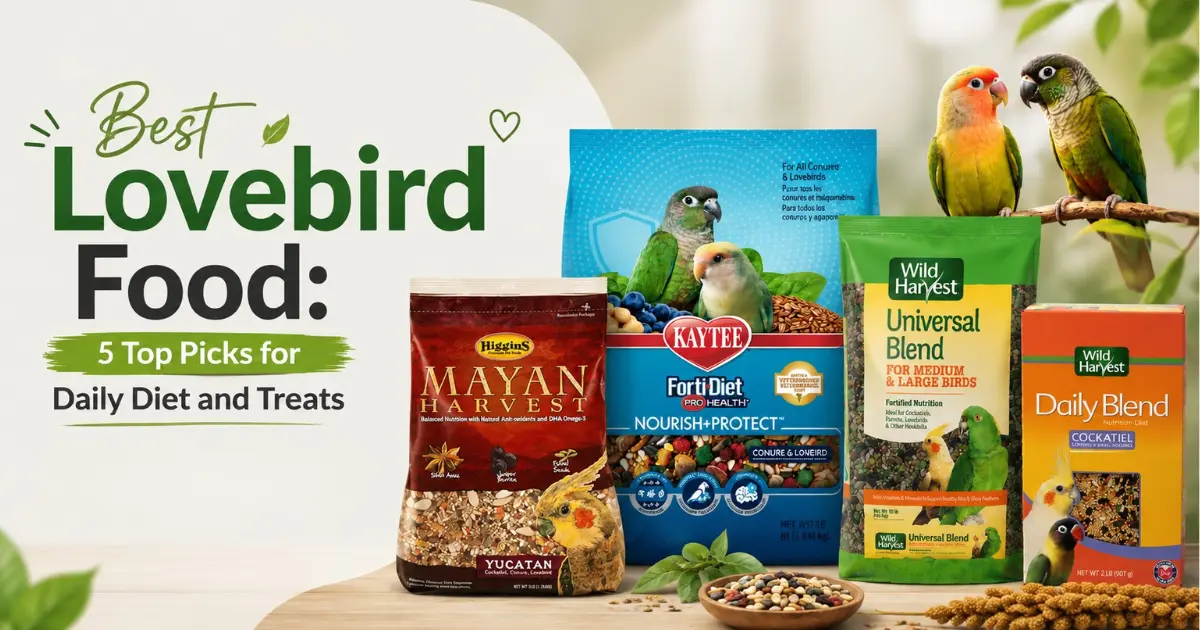
Lovebirds will eat almost anything you put in front of them. That’s kind of the problem, actually — “will eat it” and “should be eating it” aren’t the same thing, and the gap between the two is basically what separates decent lovebird food from something that’s just filler. So let’s get into five options. A couple work as full daily diets, one’s a foraging treat, and a couple more get shared across lovebirds and birds around that same size — cockatiels, conures, that range.
Quick Comparison
| Product | Highlights | Best For |
| A&E Cage Co French Spray Millet | Natural whole millet spray, encourages foraging | Lovebird treats and enrichment |
| Kaytee Forti-Diet Pro Health Conure & Lovebird Food | Omega-3s, prebiotics, probiotics | Everyday complete lovebird diet |
| Higgins Mayan Harvest Yucatan | Natural seed and fruit blend, bee pollen | Variety alongside a base diet |
| Wild Harvest Daily Blend (Cockatiel, Lovebird & Small Hookbill) | Millet, sunflower, safflower seed mix | Daily seed feeding |
| Wild Harvest Universal Blend | Seed and vegetable blend, fortified nutrition | Lovebirds alongside larger hookbills |
1. A&E Cage Co French Spray Millet Bird Treat
What Is It?
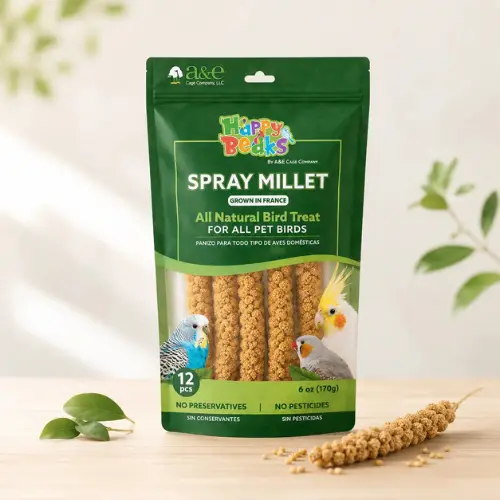
Treat, not dinner — that’s the short version. It’s a spray of natural millet grown in France, aimed at budgies, cockatiels, canaries, finches, lovebirds, and a handful of other small parrots. Think of it as something that sits alongside a real diet, not something that replaces one.
Key Features
Since it’s a whole spray instead of loose seed poured into a dish, birds actually have to work for it — pulling millet off the stem piece by piece, which taps into foraging instinct in a way a bowl of seed just doesn’t. The ingredient list is refreshingly short: French millet, plus calcium, magnesium, and phosphorus. It’s marketed pesticide-free and leans toward enrichment and training, so if you’re using treats to reinforce good behavior, this fits that role well.
Specifications
| Spec | Detail |
| Brand | A&E Cage Company |
| Flavor | Millet |
| Age Range | All Life Stages |
| Item Form | Spray |
| Weight | 6 ounces (12-spray bag) |
| Breed Recommendation | All Breed Sizes |
| Diet Type | Plant-Based |
| Use | Enrichment, Training |
Pros & Cons
Pros:
- Simple, single-ingredient natural millet spray
- Gets birds foraging instead of just picking at a bowl
- Fits naturally into enrichment and training routines
- Works for lovebirds and several other small bird species
Cons:
- A treat, not a full lovebird diet on its own
- No added vitamins or probiotics the way fortified diets have
FAQs — A&E French Spray Millet
Is this a complete lovebird food or just a treat?
Just a treat — it’s meant to supplement a lovebird’s regular diet, not stand in for it.
What’s in the ingredient list?
French millet, calcium, magnesium, and phosphorus. That’s the whole list.
Can other birds eat this besides lovebirds?
Sure — budgies, cockatiels, canaries, and finches are all mentioned too.
2. Kaytee Forti-Diet Pro Health Conure & Lovebird Food
What Is It?
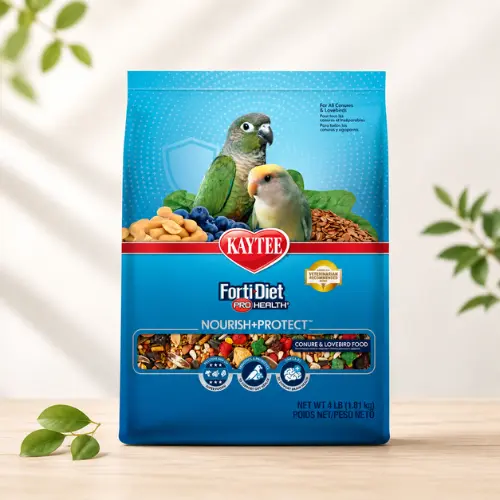
This is the everyday option — built specifically around conures and lovebirds, not just tacked onto a generic all-species bag. Kaytee’s gone past a plain seed mix here, aiming for something closer to a complete diet with digestion, brain function, and feather health all factored in.
Key Features
There’s a “superfood” angle running through this one — flaxseed, peanuts, blueberries, spinach, all folded into the seed and chunk base. Prebiotics and probiotics show up to support gut bacteria, and omega-3s plus antioxidants are positioned around brain function, for whatever that’s worth to you. Egg crumbles among the special ingredients tie into the skin and feather health claim too. It’s labeled allergen-free and low sodium, with a fairly long list of vitamin and mineral supplements rounding things out.
Specifications
| Spec | Detail |
| Brand | Kaytee |
| Target Species | Conures, Lovebirds |
| Flavor | Seed |
| Age Range | Adult |
| Item Form | Chunk |
| Weight | 4 pounds |
| Breed Recommendation | Small Breeds |
| Allergen Information | Allergen-Free |
| Diet Type | Veterinary Diet |
Pros & Cons
Pros:
- Formulated specifically for conures and lovebirds, not a generic blend
- Prebiotics and probiotics baked in for digestive support
- Omega-3s and antioxidants included
- Superfood ingredients — flaxseed, blueberries, spinach
Cons:
- Ingredient list includes artificial colors (FD&C Yellow No. 5, Red No. 40, Blue No. 1)
- Chunk form might take some birds a beat to get used to versus loose seed
FAQs — Kaytee Forti-Diet Conure & Lovebird Food
Is this formulated specifically for lovebirds?
It is — built for conures and lovebirds together, not a catch-all blend.
What’s included for digestive health?
Prebiotics and probiotics, meant to support a balanced gut.
What form does this lovebird food come in?
Chunk-style, rather than loose seed or standard pellets.
3. Higgins Mayan Harvest Yucatan Food Mix
What Is It?
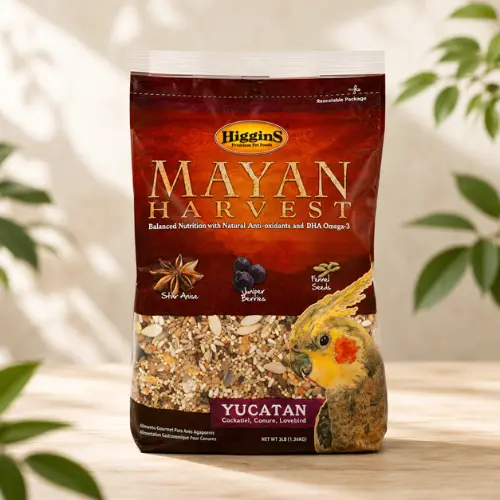
Higgins goes a different direction — natural seed blend for cockatiels, lovebirds, and conures, but mixed in with dried fruit, nuts, and legumes instead of sticking to a plain seed or pellet base. More variety, basically, than what you’d get from a standard daily mix.
Key Features
The ingredient list is long and honestly kind of fun to read through — safflower, white millet, canary seed, then dried banana, apple, cranberry, papaya, mung beans, lentils, that sort of thing. Whole bee pollen is in there too, which the brand ties to immune support, alongside encapsulated probiotics and DHA omega-3 for digestion. No artificial colors or preservatives, according to the label, and it’s built for small to medium breeds.
Specifications
| Spec | Detail |
| Brand | Higgins |
| Flavor | Yucatan — Star Anise, Juniper Berries, Spearmint |
| Age Range | All Life Stages |
| Item Form | Stick |
| Weight | 3 pounds |
| Breed Recommendation | Small to Medium Breeds |
| Allergen Information | Contains Cereals with Gluten |
| Nutrient Claim | No Added Sugar |
Pros & Cons
Pros:
- Long list of seeds, fruits, and legumes rather than a single grain base
- Bee pollen and encapsulated probiotics included
- No artificial colors or preservatives
- Works for lovebirds alongside cockatiels and conures
Cons:
- Contains gluten-containing cereals — worth flagging for sensitive birds
- Stick format is a bit different from standard loose seed or pellet feeding
FAQs — Higgins Mayan Harvest Yucatan
Is this food for lovebirds specifically, or multiple species?
Multiple — cockatiels, lovebirds, and conures are all named on the label.
Does this contain artificial preservatives?
No, it’s labeled with no artificial colors or preservatives.
What makes this different from a standard seed mix?
The fruit, legumes, and bee pollen mixed in — it’s not just a plain grain base.
4. Wild Harvest Daily Blend (Cockatiel, Lovebird & Small Hookbill)
What Is It?
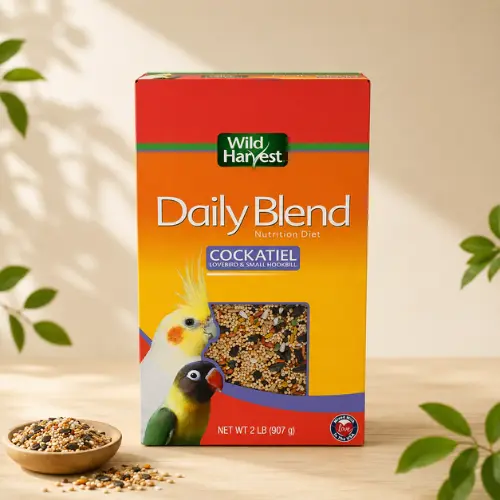
This is Wild Harvest’s answer to an everyday seed blend, built specifically for cockatiels, lovebirds, and small hookbills. Nothing fancy in concept — you fill the seed cup, your bird eats from it, you refill when it’s low.
Key Features
Millet, sunflower seeds, safflower seeds, and select grains make up the base, finished off with an orange essence for flavor. It’s positioned as nutrient-enriched rather than a bare-bones raw mix, and it comes in a barrier bag meant to keep everything fresh between fillings. Wild Harvest recommends refilling daily, and there’s an adjustment chart if you’re switching a bird over from another brand.
Specifications
| Spec | Detail |
| Brand | Wild Harvest |
| Flavor | Orange |
| Age Range | All Life Stages |
| Item Form | Seed |
| Weight | 2 pounds |
| Breed Recommendation | Small Breeds |
| Diet Type | Veterinary Diet |
Pros & Cons
Pros:
- Built specifically for cockatiels, lovebirds, and small hookbills
- Millet, sunflower, and safflower combination
- Barrier bag helps keep the seed fresh longer
- Simple, no-fuss daily feeding format
Cons:
- Smaller 2-pound bag compared to a couple other diets here
- Orange flavoring might not be everyone’s preference for a plain daily feed
FAQs — Wild Harvest Daily Blend
Which birds is this blend made for? Cockatiels, lovebirds, and small hookbills, per the listing.
What’s in the seed mix?
Millet, sunflower seeds, safflower seeds, and select grains.
How often should the seed cup be refilled?
Daily, according to Wild Harvest’s own recommendation.
5. Wild Harvest Universal Blend for Medium and Large Birds
What Is It?
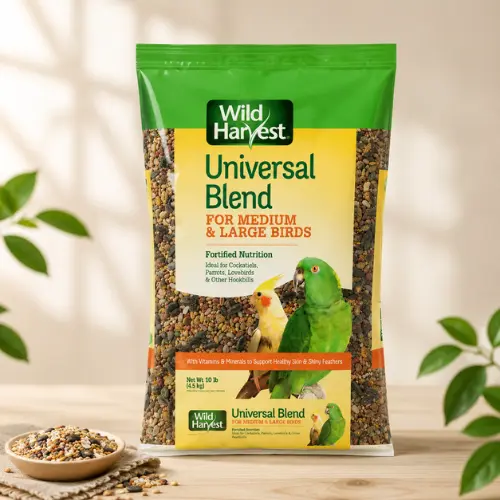
Wider net here. This one’s built as a universal blend across cockatiels, parrots, lovebirds, and other hookbills, mixing in vegetables rather than sticking to seed alone.
Key Features
Sunflower and safflower seeds get paired with a vegetable medley, fortified with vitamins and minerals aimed at skin and feather health. It’s pellet-based rather than loose seed, and like the Daily Blend above, it’s meant to be topped off in the seed cup regularly. At 10 pounds, the bag is a lot bigger than anything else on this list — makes sense if you’re feeding more than one bird, or a mix of species under one roof.
Specifications
| Spec | Detail |
| Brand | Wild Harvest |
| Flavor | Seed and Vegetable Medley |
| Age Range | All Life Stages |
| Item Form | Pellet |
| Weight | 10 pounds |
| Breed Recommendation | Medium and Large Birds |
| Allergen Information | BPA-Free |
| Diet Type | Plant-Based |
Pros & Cons
Pros:
- Listed as suitable for lovebirds along with cockatiels, parrots, and other hookbills
- Combines seed with an actual vegetable medley
- Fortified with vitamins and minerals for skin and feather health
- Large 10-pound bag works well for multi-bird households
Cons:
- Breed recommendation skews toward medium and large birds, so portioning for a lovebird needs some attention
- Pellet form is a departure from the seed-based diets elsewhere on this list
FAQs — Wild Harvest Universal Blend
Is this blend suitable for lovebirds? Yes — lovebirds are specifically named alongside cockatiels, parrots, and other hookbills. What form does this food come in? Pellets, combined with a seed and vegetable medley. How large is the bag? 10 pounds.
Buying Guide: How to Choose the Right Lovebird Food
A handful of things worth sorting out before picking one of these.
Daily Diet vs. Treats
Not everything here is meant to carry the full diet. The A&E Spray Millet is built for foraging and enrichment — a treat, essentially — while the Kaytee, Wild Harvest, and Higgins products are meant for regular feeding. A solid daily base with the occasional treat mixed in tends to work better than leaning on one or the other exclusively.
Life Stage and Species Match
Some of these blends are shared across a few species at once — cockatiels, conures, lovebirds together — while others stretch to include larger hookbills too. Checking the breed recommendation before buying any lovebird food is worth the extra thirty seconds, since it affects whether the portion sizes and ratios actually line up with what a lovebird needs.
Pellet, Seed, or Stick Blends
Format varies quite a bit across this list — chunk, seed, pellet, stick, all represented here. Some lovebirds take to one format faster than another, and honestly, trial and error is pretty normal before landing on what a particular bird actually prefers.
Reading the Ingredient List
A few of these lean on prebiotics, probiotics, and omega-3s, while others stay closer to a raw seed and grain base. Worth checking whether a product’s added vitamins and minerals or if it’s relying mostly on the base ingredients themselves — that’s usually where the real differences show up. If you’re rounding out more of your bird’s setup, take a look at our bird accessories collection 5 Best Bird Feeder with Camera (2026 Picks) for feeders, baths, and toys to go with any of these.
Frequently Asked Questions
What’s the difference between lovebird pellets and lovebird food pellets in general?
Not much, really — a pelleted lovebird diet, like the Wild Harvest Universal Blend, combines multiple ingredients into one formed piece instead of loose seed.
How do I find the best lovebird food for my bird?
Start with the target species and breed recommendation on the label, then figure out whether it’s a complete daily diet or more of a treat, like the spray millet here.
Are lovebird treats necessary, or just extra?
Not strictly necessary for basic nutrition, but treats like spray millet support foraging behavior and pair well with a solid daily diet.
Can the same food work for lovebirds and cockatiels?
Often, yes — a couple of the products here, including the Higgins and Wild Harvest blends, list both species side by side.
What should I look for in a lovebird diet with added nutrients?
Check the ingredient list for prebiotics, probiotics, or omega-3s — several of these options build those in for digestive and skin support.